
The final week of my 30 day project From My Garden has come to a close. At the beginning, the project seemed feasible. Then, as I was getting more into the project, it became daunting. The restriction of making images only from plant life from my garden in late winter was not the best choice.
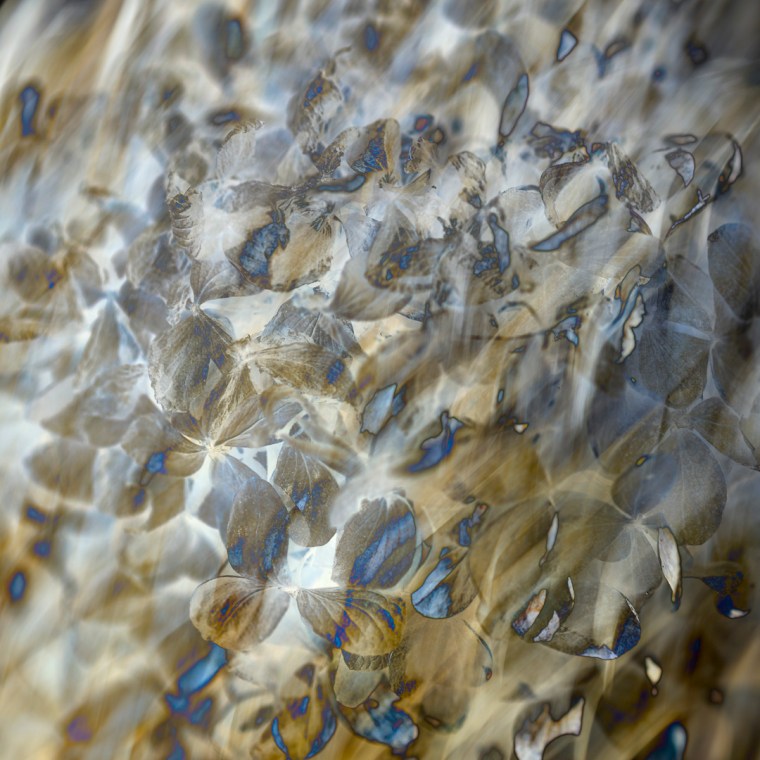
The image below is a multiple exposure processed in both LR and PS. One image is an intentional camera movement and the other is a traditional image. Both are of dried limelight hydrangeas in my front yard. The images were blended in PS using the difference mode.
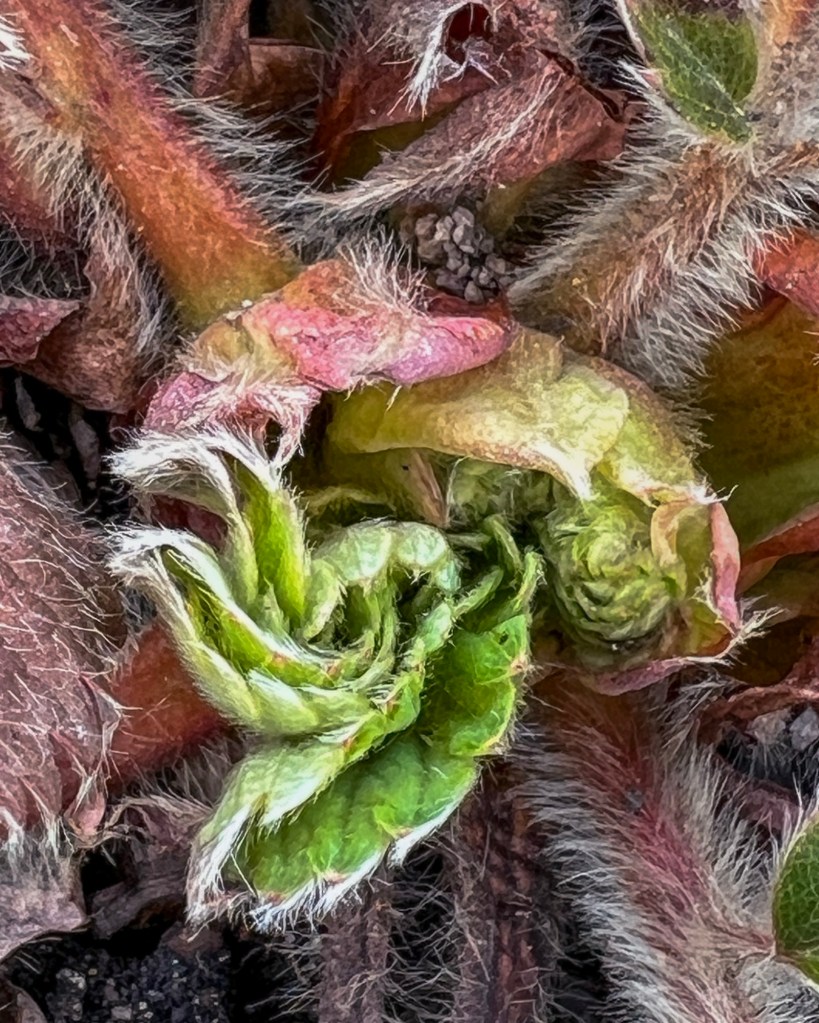
We have had warmer than normal temperatures the last few weeks. My strawberry patch is already sending out new leaves. Have you ever looked close at strawberry plants new leaves? The bright green leaves and red hairy stems were eye catching. More so with the macro image below.
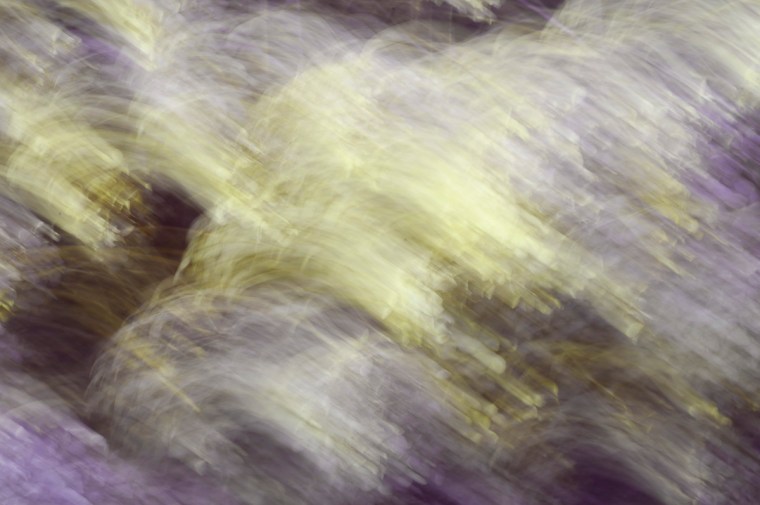
My limelight hydrangea are one of my favorite flowers to photograph in my garden. This winter they have held up well and given me many opportunities to photograph them. The trick was to photograph them in new and different ways. This next image is a single ICM processed in LR. The lime green and purple tones were brought out by adjusting the sliders in the calibration panel of the develop module.
We had bad weather on March 14th. Storms were coming with rain and high winds. Even the potential for tornadoes. After work, we had to batten down the hatches so to speak. Making an image was not possible. I did post the below image on the 15th as I had missed the day before. This image is of an allium that has already started to spout. This delicate sprout was eaten by the rabbit living in our back yard. It will be interesting to see if it is able to recover.

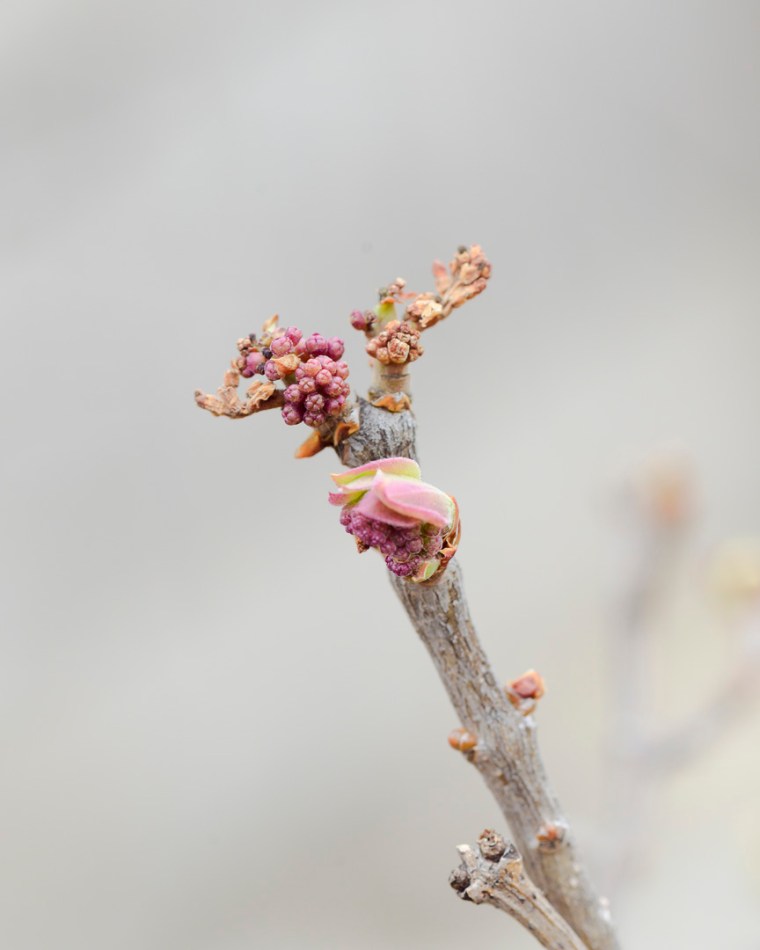
I have been watching my lilac tree closely as we have had some below freezing temperatures and snow in the middle of the above normal temperatures we have been experiencing. Making images of the same lilac buds has become a second project. I posted these buds in a previous post. As you can see, the bud on the top right has either succumbed to the cold temperatures or has been eaten. I was excited to see the leaves below sprouting and a new lilac bud beginning to emerge. Since this image was made, we have had more snow and below freezing temperatures. I’m not sure if my lilacs will survive having sprouted too early and more below freezing temperatures are expected.
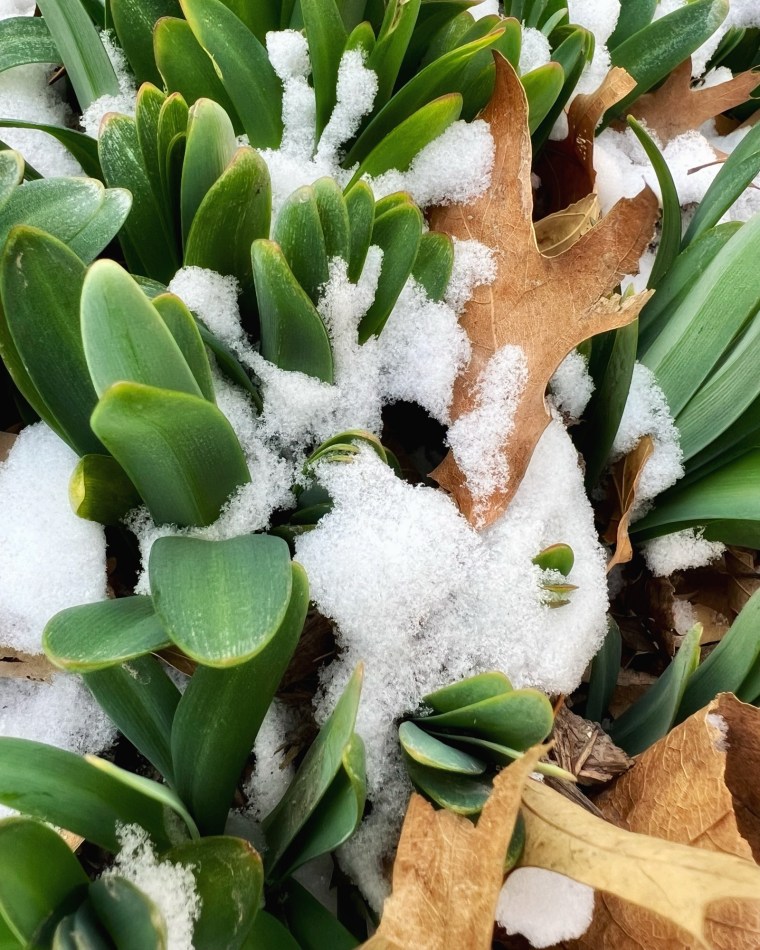
This past Sunday, I awoke to snow covering our front and back yards. This next image is of my Naked Ladies aka Surprise Lilies that have already sprouted and are three or four inches tall already. The green leaves, snow and a few dried oak leaves caught my attention. Not only the color, but all the different textures.
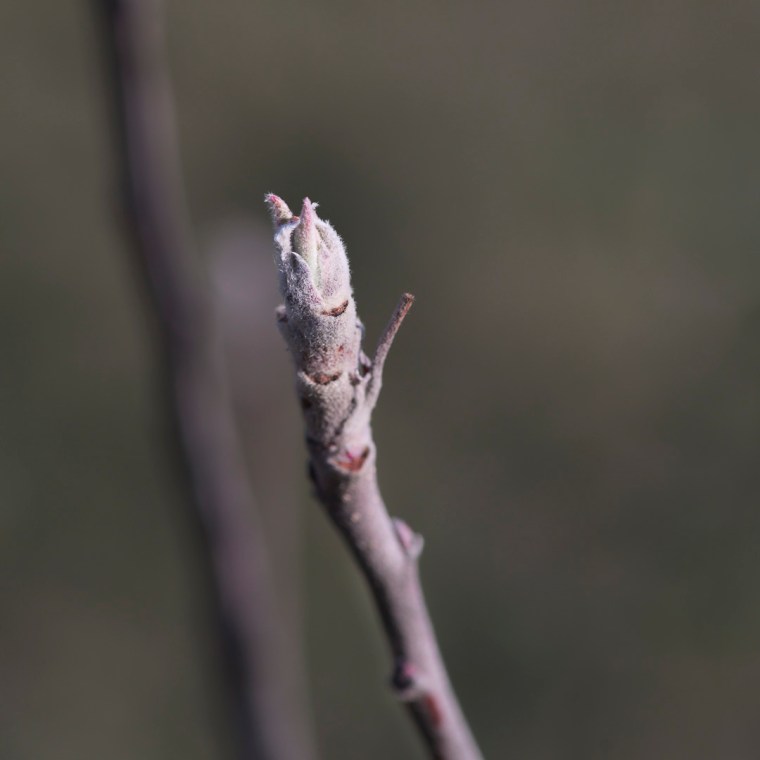
This is the first year to see my Pink Lady Apple tree bud out. I first planted a Pink Lady Apple tree in the fall of 2023. It did not survive that next winter. Fortunately, there was a one year guarantee and the nursery replaced the tree last spring. Knowing, my first tree did not survive, I was anxious to see if the replacement would survive. Fortunately it has! There probably won’t be any blossoms until next year, but even if just one appears, I hope to make many images.
The finally image is of rhubarb that has started to sprout. I love all the creases in the leaves and the green and red colors. Again, we have more below freezing temperatures in the forecast, so hopefully I’ll have a good crop this year.

Now that the project is complete, I have been able to reflect on the challenges of such a restrictive project. While some of the images are certainly more documentary than artistic, the project wasn’t about making artistic images for 30 days. Some may say, what was she thinking showing such documentary images? And that’s okay. The project was about picking up my camera each day and noticing all the potential images that could be made in my own garden.
The project certainly made me look close at my garden. Finding plant life each day made me realize how much was happening in my garden. While my garden is many shades of brown, it is also made of many textures. Both I would not have noticed without this project. Some days were overcast and some were full sunshine. If you’re not a photographer, have you noticed how the different light changes the look of your garden? The light is also changing with the season, changing from winter to spring. And then daylight savings time also came into play. Some of the images are of the same plants, but with different light they look different.
Some images are certainly more artistic than others. Recently, I attended an online photography conference through Out of Chicago. Using some of the styles of photography presented during the conference, as well as post processing techniques I learned, were used to make some of the images in this project. It was fun to practice some of the techniques. Some of the images were successful and some are just okay at best.
Do I consider this project a success? Absolutely! It forces me to pick up my camera each day and be creative. Something I haven’t done enough of the last few years. I look forward to see how my garden changes the next several months. I typically have something blooming in my yard from April through September. However, last year I had cosmos, zinnias, purple coneflowers and black eyed susan’s still blooming in November. If you missed that post, you can read it here.
If you have been reading my posts on this project, I hope you have enjoyed seeing how many different images were made all from plant life in my garden. If this is the first post you have read, you can select the previous posts below this one.
Until next time, I hope you get outside and look at what is happening in your garden!
 Different Isn't Wrong, It's Just Different
Nice set